Nikola Tesla and the Rotating Magnetic Field
A Revolutionary Discovery.
In the early 1880s, Nikola Tesla introduced one of electricity’s most important principles: the rotating magnetic field. This breakthrough became the foundation of alternating current (AC) motors and helped unlock the large-scale electrification of the modern world.
The Principle.
By carefully arranging alternating currents through coils around a circular stator, Tesla created a magnetic field that appeared to spin. When a rotor was placed inside, currents were induced that made it turn—without brushes or commutators. The result was a motor that was efficient, durable, and far more practical than existing DC machines.
Historical Context.
Tesla first conceived the idea in 1882 while walking in Budapest. Around the same time, Galileo Ferraris in Italy explored similar effects, but it was Tesla who patented the induction motor in 1887 and presented a complete AC system the following year. His insight and engineering skill turned the principle into a working technology.
Public Demonstration.
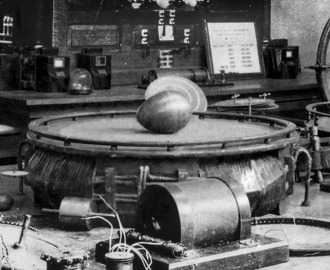
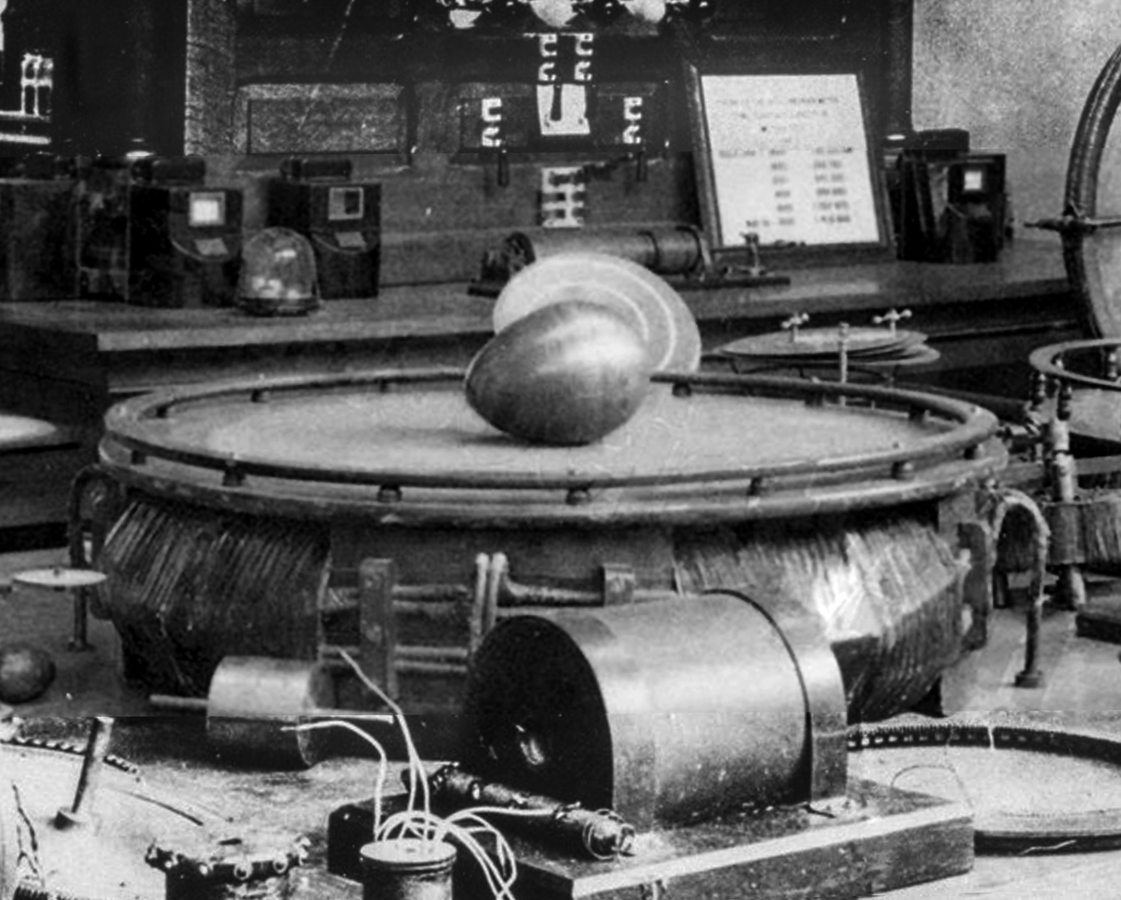
At the 1893 World’s Columbian Exposition in Chicago, Tesla amazed audiences with his “Egg of Columbus” display. Using a rotating magnetic field, he spun a copper egg upright—a vivid, almost magical way to show an invisible force at work. It captured the imagination of the public and symbolized the dawn of a new electrical era.
Legacy.
Tesla’s discovery continues to shape modern life:
In honor of Tesla’s contribution, the international unit of magnetic flux density bears his name: the tesla.
Conclusion.
The rotating magnetic field is one of Tesla’s greatest legacies. First imagined in 1882, it remains at the heart of countless machines and systems—turning silently, yet powering the modern world.